GMet and AGRHYMET sign agreement to enhance collaboration on climate services
Date: 2026-04-19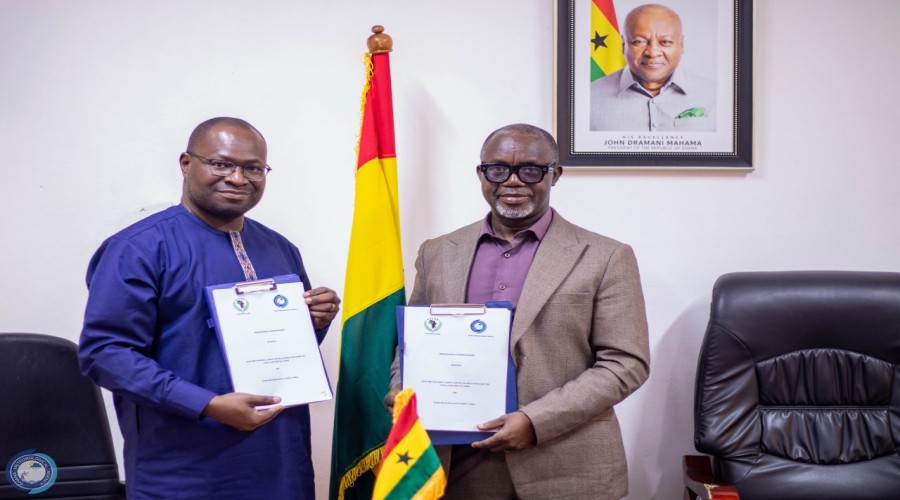
By: Nana Appiah Acquaye
The
Ghana Meteorological Agency (GMet) and the AGRHYMET Regional Center have signed
a Memorandum of Understanding to enhance collaboration on climate services
across West Africa and the Sahel.
The
agreement, follows a high-level visit by a joint delegation from AGRHYMET, the
Economic Community of West African States, and the World Meteorological
Organization, marking a step toward deeper regional cooperation.

The
MoU establishes a framework for the regular exchange of meteorological,
hydrological, and climate data, alongside joint research initiatives and
capacity-building programmes. It is also expected to support the operations of
the AGRHYMET Regional Climate Centre for West Africa and the Sahel.
Officials
said the partnership aims to improve the production and dissemination of
climate information and forecasts while strengthening technical expertise in
key areas, including meteorology, hydrology, food security, natural resource
management, and disaster risk reduction.
Director
General of AGRHYMET, Dr. Dayo Guiguigbaza-Kossigan, commended GMet for its
technical capacity and highlighted the strong potential for collaboration
between the two institutions. He noted that the agreement would facilitate
joint efforts in capacity development and climate services delivery.

GMet’s
Deputy Director-General for Support Services, Vivian Abla Kally, described the
agreement as timely and aligned with the agency’s mandate, particularly in
advancing capacity-building objectives. Deputy Director-General for Operations,
Dr. Ignatius Kweku Williams, reaffirmed the agency’s commitment to implementing
the agreement and strengthening its position within the region.
Director-General
of GMet, Dr. Eric Asuman, said the partnership represents an opportunity to
enhance institutional growth and regional impact, adding that collaboration
remains central to achieving broader climate resilience goals.
The
agreement is expected to contribute to more coordinated climate services
delivery in the sub-region, supporting efforts to build resilient systems
through knowledge sharing and strengthened institutional capacity.