EU and African Union reaffirm space cooperation at Second Joint Dialogue
Date: 2026-03-24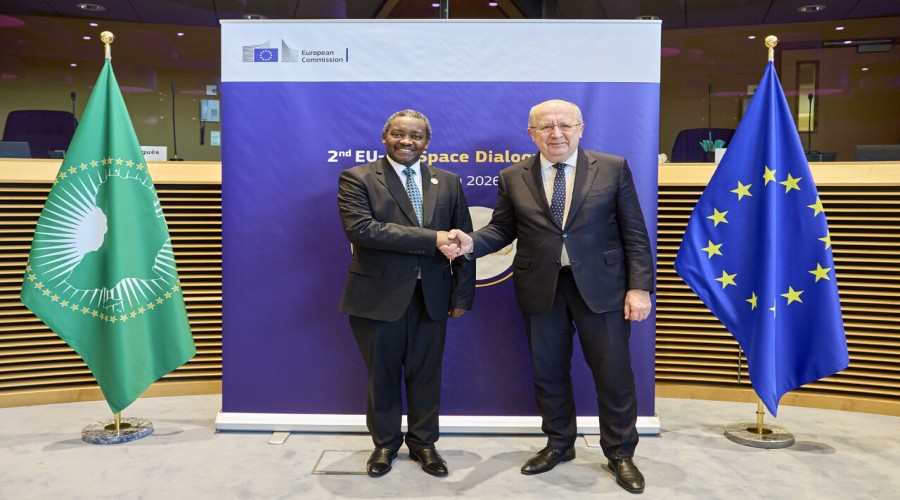
By: Nana Appiah Acquaye
The
European Union and the African Union have reaffirmed their commitment to
deepening collaboration in the space sector during the second EU–AU Space
Dialogue, a high-level meeting focused on advancing innovation and sustainable
development.
The
Dialogue was jointly led by Andrius Kubilius and Banyankimbona, who headed
delegations from Europe and Africa respectively.
Opening
the session, Commissioner Kubilius described Europe and Africa as natural
partners in leveraging space technologies to support resilience, economic
growth, and innovation. Commissioner Banyankimbona emphasized the need for a
balanced partnership that delivers tangible benefits for citizens across both
continents.

Ahead
of the formal discussions, both Commissioners engaged with a group of students
on career opportunities and skills development in the space sector,
highlighting the importance of investing in the next generation of talent.
Deliberations
during the Dialogue focused on key areas including Earth observation, satellite
navigation, space science, and downstream applications that support climate
action, disaster management, and digital transformation. Participants also
examined capacity building initiatives, with emphasis on education, training,
and knowledge exchange to strengthen Africa’s space ecosystem.
The
meeting concluded with a renewed commitment to expand cooperation through
concrete actions, including increased data sharing, joint research initiatives,
and support for flagship programmes. Stakeholders also identified the need to
strengthen institutional partnerships and encourage greater private sector
participation.

Both
sides underscored the importance of aligning space collaboration with broader
policy priorities such as the green transition and sustainable development
goals, while promoting the responsible use of outer space.
Officials
said the Dialogue sets a clear path for future engagement, focusing on
sustained cooperation, investment in skills, and the effective use of space
technologies to address shared global challenges.