By: Nana
Appiah Acquaye
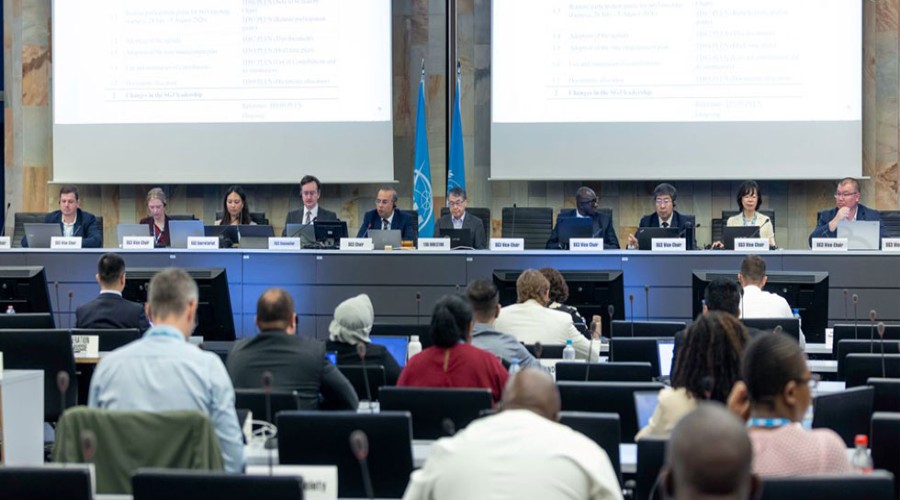
Egypt has chaired the latest
meeting of the International Telecommunication Union’s Telecommunication
Standardization Sector (ITU-T) Study Group 3 (SG3), which examined economic,
financial and policy issues shaping the global digital economy.
The meeting was held from
July 28 to August 5 in Geneva, Switzerland, bringing together representatives
from ITU Member States and Sector Members to deliberate on tariff and
accounting principles as well as international telecommunication and ICT
economic and policy issues.
Discussions covered a range
of emerging technology and connectivity issues, including satellite
connectivity, over-the-top (OTT) services, the Internet of Things (IoT), global
internet connectivity and the economic implications of artificial intelligence.
The meeting resulted in the
approval of several technical deliverables aimed at addressing economic and
policy challenges associated with digital connectivity. The Focus Group on
Costing Models for Affordable Data Services (FG-CD) concluded its work with the
adoption of four technical reports focused on promoting more equitable access
to digital services globally.
SG3 also agreed on technical
reports addressing the economic and policy frameworks associated with network
slicing, a technology that enables multiple virtual networks to operate on
shared physical infrastructure.
Members further approved two
new work items. One will examine the economic and regulatory dimensions of eSIM
deployment in IoT environments, while the second, proposed by Egypt, will
assess the economic and regulatory implications of IPv6 adoption.
Egypt’s chairing of the
study group further highlights the country’s longstanding involvement in the
work of the ITU. The country has participated actively in the Union for more
than six decades, contributing to discussions and decision-making at regional
and global levels.
Egypt is also currently the
only ITU Member State chairing a study group across all three ITU sectors, in
addition to leadership roles within the General Secretariat. The positions
reflect the country’s continued involvement in international telecommunications
policy, standards development and digital transformation discussions.