By: Nana
Appiah Acquaye
The Rwanda ICT Chamber has
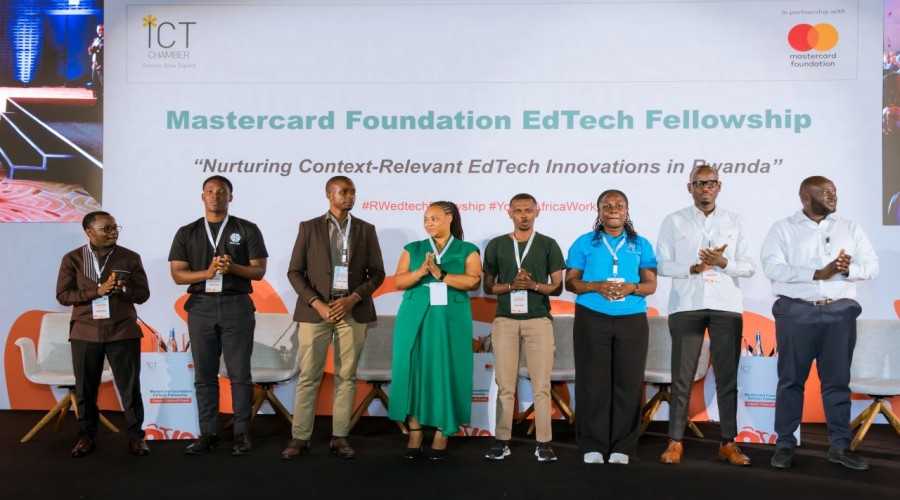
officially launched cohort one of the Mastercard Foundation EdTech Fellowship,
marking a new milestone in efforts to strengthen Rwanda’s education technology
ecosystem and expand access to quality learning through digital innovation.
The programme, implemented
by the Rwanda ICT Chamber in partnership with the Mastercard Foundation, is
designed to support locally driven EdTech solutions that aim to improve
educational access and outcomes, particularly for underserved communities.
The Fellowship will run over
a six-month acceleration period, during which selected EdTech startups will
receive mentorship, business coaching, strategic advisory support, access to
science-of-learning training, and equity-free grants of up to US$50,000 to
support scale and sustainability.
According to the organisers,
each participating startup is expected to reach at least 5,000 learners, with
the programme collectively targeting an impact of more than 40,000 learners
across the cohort.
The initiative is focused on
empowering high-potential EdTech companies to develop and deploy innovative
digital learning solutions that address gaps in access, quality, and
inclusivity within Rwanda’s education system.
The Rwanda ICT Chamber noted
that the programme is part of broader national efforts to build a strong
innovation ecosystem and promote technology-enabled learning as a driver of
long-term socio-economic development.
The inaugural cohort
includes startups such as Nyereka Tech, Berulo App, SOMABOX, SOMA FOUNDATION,
ZoraBots Africa Ltd, Brain Ink, Creativity Lab, EdTech Solutions, and Jobra,
among others.
Officials emphasized that
the Fellowship aligns with Rwanda’s ambition to become a regional hub for
digital innovation, particularly in the education sector, by supporting
scalable solutions that can transform learning outcomes across the country.
The launch underscores
continued collaboration between development partners and local institutions in
advancing inclusive, technology-driven education systems across Africa.