Ghanaian student and Yale teammates win second place at Google AI Hackathon with vision-assist device
Date: 2026-04-14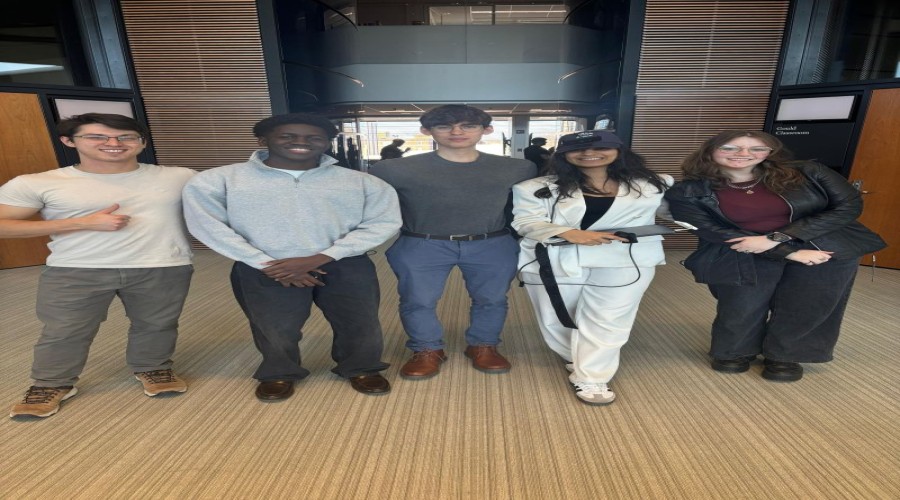
By: Nana Appiah Acquaye
A Ghanaian student, David Antwi and his Yale teammates have secured a second place at the Google x Yale School of Management “Build with AI”
Hackathon, after developing a wearable artificial intelligence-powered device
designed to assist people with visual impairments.
The prototype, named iSpy, was built within 12 hours and combines hardware and software to function as an AI-driven vision assistant by David Antwi, Filippo Fonseca and Emir Ahmed (Yale College undergrads), Janika Jakhar (Yale School of Management), and Sophia Bugay (undergrad at University of Maryland global campus).
The device features a small camera that can be attached to clothing, allowing users to receive real-time audio descriptions of their surroundings, read text, identify objects, and retain contextual information for follow-up queries.

The
system is powered by Google Gemini for multimodal processing, alongside
additional tools for voice recognition and speech output, all integrated into
an accessibility-focused mobile application.
The
innovation targets a global challenge, with an estimated 2.2 billion people
living with some form of vision impairment, including 43 million who are fully
blind.
Despite
technical challenges during the final presentation, including a malfunctioning
demo, the team proceeded with their pitch, emphasizing the real-world impact
and potential of their solution.

The
hackathon, organised in collaboration with the Yale School of Management and
Google, brought together students to develop practical AI applications
addressing pressing global issues.
Team
members credited the collaborative effort and resilience during the competition
as key factors behind their success, noting that the project’s focus on
accessibility and social impact remained central throughout the development
process.