African leaders call for health financing to be treated as strategic economic investment
Date: 2026-04-13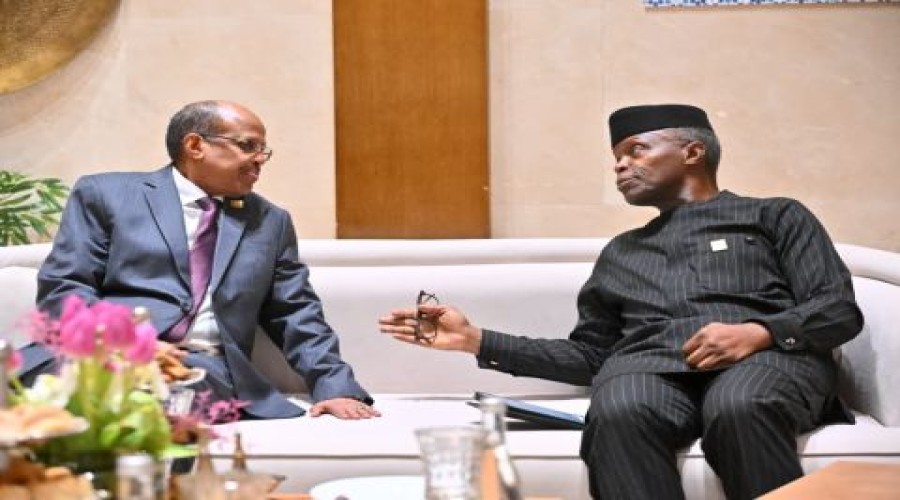
By: Nana Appiah Acquaye
African
policymakers and development leaders have called for a fundamental shift in how
health financing is positioned within national economic strategies, urging
governments to treat it as a core investment rather than a social expenditure.
This
position was highlighted by the former Vice President of Nigeria, Yemi Osinbajo
during the 58th Session of the Conference of African Ministers of Finance,
Planning and Economic Development held in Tangier. Delivering the opening
keynote, former Vice President Osinbajo emphasized that sustainable economic
growth across the continent depends significantly on the health and
productivity of its population.

The
session also marked the launch of the “Transforming Health Financing in Africa”
initiative by United Nations Economic Commission for Africa, aimed at
strengthening health systems and improving financing models across African
countries.
Osinbajo
underscored that economies investing strategically in healthcare are better
equipped to withstand external shocks and maintain long-term development
trajectories. He noted that robust health systems contribute directly to
national resilience, workforce productivity, and broader socio-economic
stability.
The
high-level meeting brought together key continental and global stakeholders,
including Claver Gatete, Mahmoud Ali Youssouf, and Nadia Fettah Alaoui,
alongside representatives from international organizations such as the United
Nations Development Programme and the World Health Organization.

Discussions
focused on redefining policy frameworks to prioritize health as a driver of
economic transformation, with participants advocating for increased domestic
resource mobilization, innovative financing mechanisms, and stronger
institutional coordination.
The
conference reinforced a growing consensus that aligning health investment with
macroeconomic policy is critical to advancing Africa’s development agenda and
ensuring long-term prosperity across the continent.