
Zimbabwe advances air quality monitoring through satellite and ground-based collaboration
Date: 2026-04-12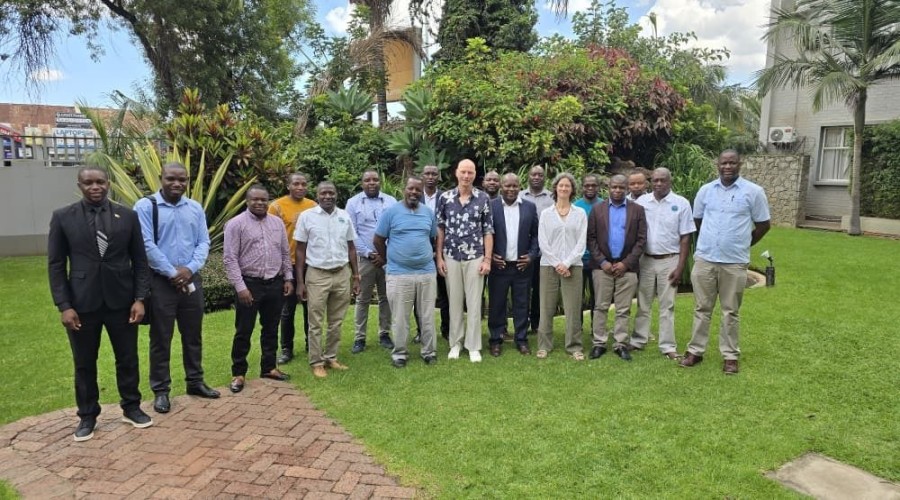
By: Nana Appiah Acquaye
The
Zimbabwe National Geospatial and Space Agency (ZINGSA) has successfully
concluded a joint air quality monitoring initiative aimed at strengthening the
country’s capacity to track and manage air pollution using both satellite and
ground-based technologies.
The
project, implemented under the EO AFRICA Research and Development Facility in
coordination with the European Space Agency and the African Union Commission,
brought together local and international partners, including the Environmental
Management Agency (EMA), the Royal Netherlands Meteorological Institute (KNMI),
and the University of Twente.

Titled
“Improving Zimbabwe’s capacity for air quality monitoring from the ground and
by TROPOMI” (AQ4ZIM_ZW_NL), the initiative focused on integrating
satellite-derived air quality data with in situ measurements to enhance
environmental monitoring capabilities. The EO-Africa Innovation Lab played a
key role in supporting algorithm development and data processing, leveraging
its extensive satellite datasets and data-sharing infrastructure.

As
part of the project, 11 IQAir sensors were installed across selected locations
to measure pollutants including PM1, PM2.5, PM10 and carbon dioxide (CO2),
providing real-time, localized data to complement satellite observations.
A
project closure meeting was held in Harare, marking the completion of the
initiative. ZINGSA acknowledged the contributions of all partners involved,
highlighting the importance of collaboration in advancing environmental
monitoring and climate resilience efforts.