By: Nana Appiah Acquaye
African
policymakers and technology leaders have called for accelerated development of
sovereign data infrastructure, including data embassies and local data centres,
to strengthen economic security and deepen continental integration.
The
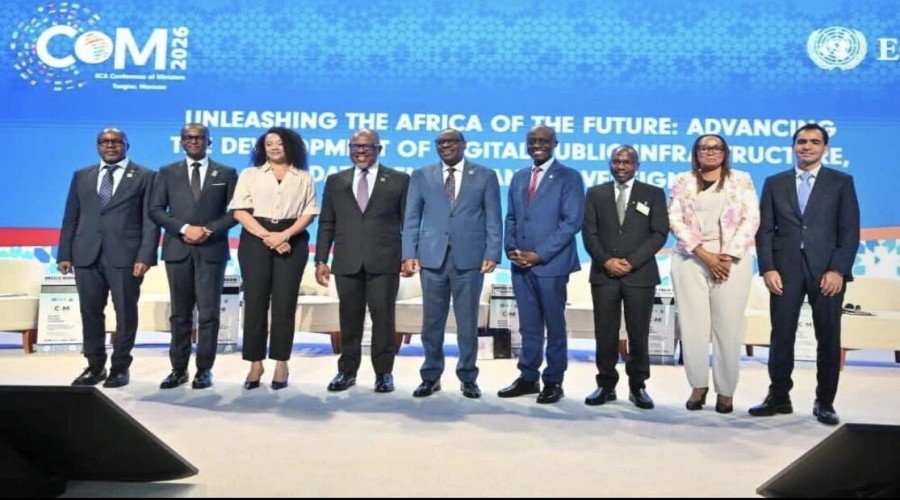
discussions took place during the 58th session of the United Nations Economic
Commission for Africa Conference of Ministers in Tangier, where stakeholders
emphasized a strategic shift from reliance on external technologies to building
homegrown digital capabilities.
At
a high-level roundtable on digital public infrastructure, participants agreed
that Africa must move beyond foundational systems toward developing advanced
data processing and artificial intelligence capabilities. Leaders stressed that
digital public infrastructure remains essential but must now be complemented by
investments in local talent, computing power, and AI model development tailored
to regional needs.
Américo
Muchanga highlighted the critical role of data sovereignty, noting that
countries must determine how and where their data is stored and processed to
maintain control over strategic assets. He described digital infrastructure as
increasingly vital to modern economies, comparable to essential utilities.
Echoing
this view, Pius Stephen Chaya underscored the need for strong public-private
partnerships supported by robust cybersecurity and data protection frameworks
to ensure the effectiveness of digital investments.
Leaders
also emphasized the importance of moving from policy design to implementation.
Ndaba Gaolathe called for prioritizing execution and removing regulatory
bottlenecks to ensure digital projects deliver tangible benefits.
Industry
stakeholders highlighted the need for significant expansion of Africa’s data
centre capacity. Adil El Youssefi noted that the continent must scale its
infrastructure to support local data processing and emerging “AI factories,”
which are essential for hosting and analyzing data within Africa.
The
concept of “data embassies” was identified as a potential model to support
regional cooperation, enabling countries to share infrastructure while
retaining control over data. Participants said such approaches could help
ensure that the economic value generated from data remains within the
continent.
Philip
Thigo emphasized the need for Africa to develop locally relevant digital
solutions, including AI systems that reflect local languages and socio-economic
contexts. He said the continent must move away from externally driven models
toward systems built around African realities.
The
session also addressed challenges related to digital inclusion, with
stakeholders noting that a significant portion of the population remains
offline despite network coverage. Angela Wamola called for policy measures such
as reducing duties on mobile devices to improve access to digital services.
Claver
Gatete stressed the importance of measuring the economic impact of digital
transformation, highlighting the role of strong national statistical systems in
informing policy and ensuring accountability.
Participants
concluded with a call to translate the African Union’s AI strategy into
actionable national frameworks, backed by dedicated funding for data governance
and infrastructure, to support a sovereign and resilient digital future for the
continent.