Experts highlight ethical AI and regional collaboration at East Africa STI conference in Kigali
Date: 2026-04-01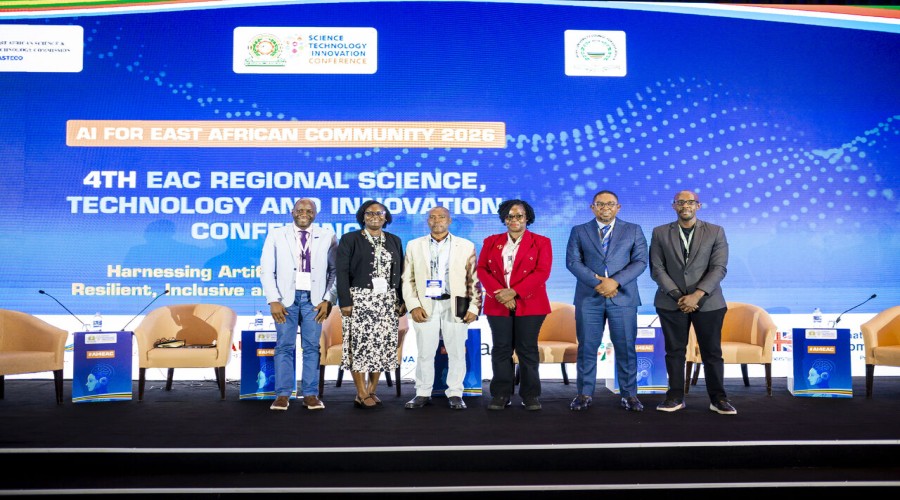
By: Kanto Kai Okanta
Stakeholders
across government, industry, academia, and development institutions have
underscored the importance of ethical governance, skills development, and
regional collaboration in advancing artificial intelligence adoption in East
Africa.
The
discussions took place during the 4th East African Community (EAC) Regional
Science, Technology and Innovation (STI) Conference held at the Kigali
Convention Centre in Rwanda. The conference was jointly organised by the East
African Science and Technology Commission (EASTECO) and the Inter-University
Council for East Africa (IUCEA), in collaboration with regional and
international partners.

Speaking
during a plenary session on “Ethics and Responsible AI in the East African
Community,” Malcolm Kijirah, Government Affairs Manager for East Africa at
Microsoft, highlighted the need for balanced and forward-looking approaches to
AI governance.
He
noted that as artificial intelligence continues to reshape economies and
societies, policymakers must address ethical risks while creating enabling
environments for innovation. Discussions at the session focused on issues
including regulatory frameworks, data governance, public awareness, and the
development of digital skills required to support AI adoption.
Kijirah
advocated for a modern interpretation of data sovereignty, emphasising that
effective governance should be based on legal authority, accountability, and
trust rather than restrictive data localisation requirements. He explained that
enabling secure data flows across borders is essential for unlocking economic
value while maintaining national interests.

He
also identified skills development as a critical factor in driving AI adoption
across the region, pointing to ongoing initiatives aimed at building digital
and AI capabilities among young people and professionals in East Africa.
Participants
at the conference further stressed the importance of a multistakeholder
approach, bringing together governments, private sector players, academic
institutions, and civil society to design inclusive and sustainable AI
frameworks.
The
conference highlighted East Africa’s growing momentum in embracing emerging
technologies and reinforced the need for coordinated regional strategies to
ensure that AI development supports resilience, inclusivity, and long-term
economic growth.