Morocco concludes “RamadanIA” hackathon
Date: 2026-03-31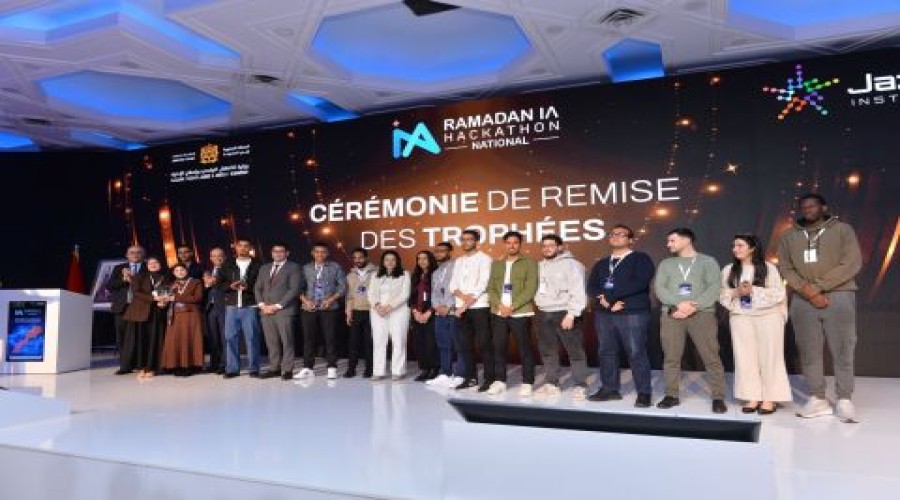
By: Kanto Kai Okanta
Morocco has concluded its nationwide “RamadanIA” hackathon, a
month-long initiative aimed at fostering artificial intelligence-driven
innovation among young people, as part of the country’s broader digital
transformation agenda.
The
closing ceremony, held on March 30, 2026, in Rabat, was chaired by Amal Falah
Seghrouchine, Minister Delegate to the Prime Minister in charge of Digital
Transition and Administrative Reform. The event was attended by Mohamed El
Mahdi Bensaid, Minister of Youth, Culture and Communication, Omar Seghrouchini,
President of the National Committee for the Protection of Personal Data, and
Mustapha Bousmina, President of the Euro-Mediterranean University of Fez,
alongside key stakeholders in the digital innovation ecosystem.

The
initiative, organised by the Ministère de la Transition Numérique et de la
Réforme de l'Administration, spanned the entire month of Ramadan and covered
multiple regions of the country, culminating in a final stage in the capital.
It mobilised nearly 4,000 young participants who worked in teams to develop
innovative solutions addressing national development priorities.
In
her address, Seghrouchine noted that the programme aligns with Morocco’s
accelerating digital transformation and the strategic adoption of artificial
intelligence as a driver of development. She said the initiative forms part of
the implementation of the Digital Morocco 2030 strategy and the “AI Made in
Morocco” vision, both of which seek to build an integrated digital ecosystem
grounded in innovation, skills development and digital sovereignty.
Projects
developed during the hackathon focused on key sectors including the
digitisation of public services, smart mobility, digital inclusion, tourism and
cultural heritage, environmental sustainability, energy, waste management,
water access and sanitation, as well as smart security and human dignity.

At
the national level, the first prize was awarded to a team from the
Drâa-Tafilalet region for its project “TNT.” The second prize went to a team
from the Fez-Meknes region for “Audacity Alwarid,” while a team from the
Dakhla-Oued Ed-Dahab region secured third place for its project “Talib Way.”
The
“RamadanIA” hackathon underscores Morocco’s commitment to nurturing homegrown
digital talent and leveraging artificial intelligence to address socio-economic
challenges and drive inclusive national development.