African Universities launch TERRASCAPE initiative to promote remote sensing and GIS training
Date: 2026-03-30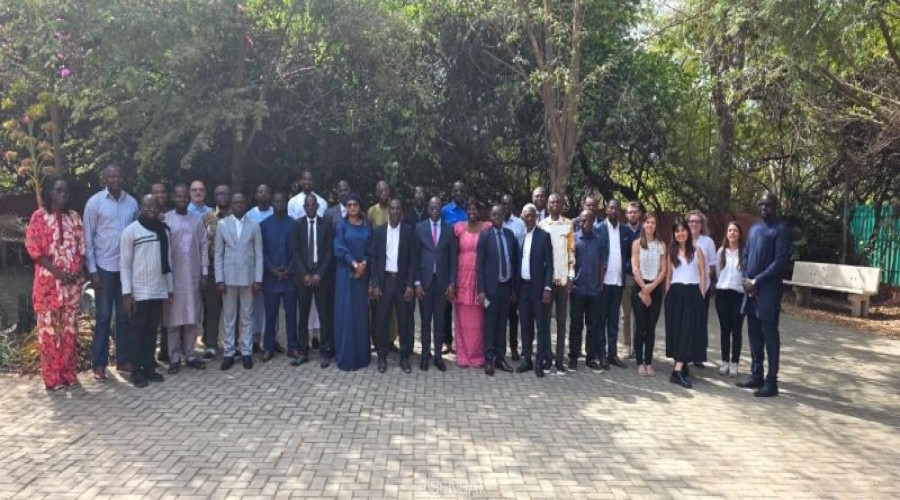
By: Nana Appiah Acquaye
African
and European academic institutions have launched the TERRASCAPE initiative to
strengthen remote sensing and geographic information systems (GIS) training
across Senegal, Côte d’Ivoire, and Cameroon.
The
programme, introduced under the SENSAT framework, aims to modernize Bachelor’s
and Master’s degree curricula by integrating artificial intelligence and
emerging space technologies to support real-time environmental monitoring and
data-driven decision-making.

The
initiative is being coordinated by Gayane Faye of Université Cheikh Anta Diop,
in collaboration with a network of African and European universities. Partner
institutions include universities in Toulouse and Cantabria, alongside African
universities such as UCAD and Université Iba Der Thiam de Thiès in Senegal,
Félix Houphouët-Boigny University and Alassane Ouattara University in Côte
d’Ivoire, and the Universities of Dschang, Ebolowa, and Ngaoundéré in Cameroon.
The
Agence Universitaire de la Francophonie is supporting the initiative with a
focus on enhancing graduate employability and promoting local entrepreneurship
through skills development.

Project
stakeholders highlighted the importance of building local capacity to utilize
data from future satellite missions, including the planned NINKI-NANKA
constellation, to address environmental and societal challenges across the
continent. The initiative underscores growing efforts to strengthen Africa’s
space and geospatial capabilities through international collaboration and
knowledge transfer.