World Bank MD concludes Ghana visit, reaffirms support for jobs, education and private sector-led growth
Date: 2026-03-27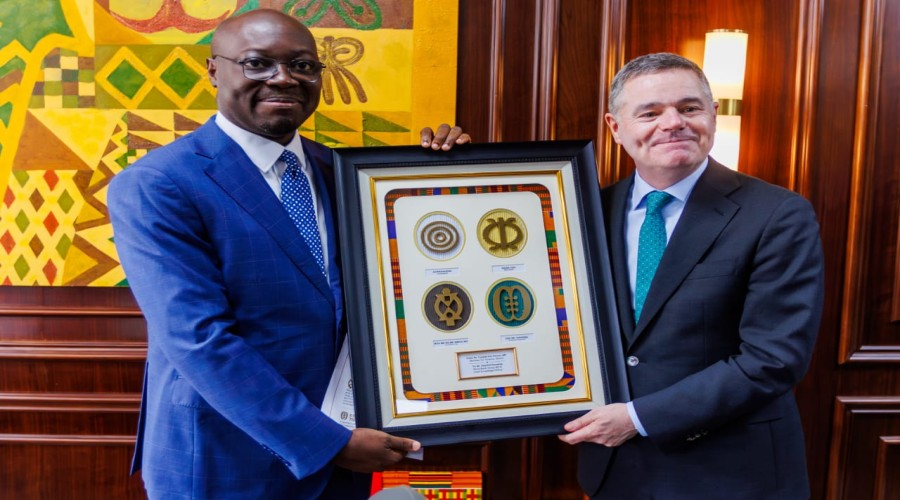
By: News Desk Report
The World Bank Group's Managing Director and Chief Knowledge Officer, Paschal Donohoe, has concluded a three-day official visit to Ghana, reaffirming the Bank’s commitment to supporting the country's economic recovery, job creation, and long-term development.
The visit, Mr. Donohoe's first official mission to Africa since his
appointment in November 2025, took place from March 15 to
18 and included meetings with President John Mahama, Finance Minister Dr. Cassiel Ato
Forson, Education Minister Haruna Iddrisu, senior government officials, private
sector leaders, civil society representatives, academia, and development
partners. Discussions centered on advancing reforms to promote inclusive sustainable
growth.

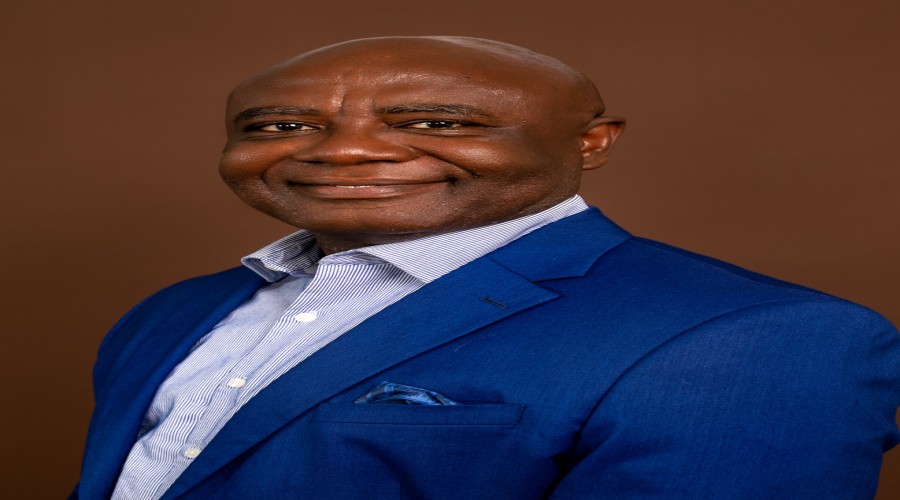
World Bank Group's Managing Director and Chief Knowledge Officer, Paschal Donohoe
Mr. Donohoe was accompanied by Marina Wes, Director of Strategy
and Operations for the Western and Central Africa Region; Robert Taliercio
O'Brien, Country Director for Ghana, Liberia, and Sierra Leone; Nathalie
Kouassi-Akon, IFC Division Director for West Africa Gulf of Guinea; and Kyle
Kelhofer, IFC Senior Country Manager for Ghana and Liberia.
Focus on economic stability and jobs
The mission opened with a high-level meeting
with Finance Minister Dr. Cassiel Ato Forson, during which Mr. Donohoe commended
the government's progress in stabilising the economy and restoring fiscal
discipline, describing the improvement in Ghana's national finances as
remarkable.
The Finance Minister acknowledged the gains but stressed that youth
unemployment remains one of Ghana’s most pressing challenges. He indicated that
public sector employment alone cannot absorb Africa's rapidly growing youth
population, and underscored the need for deliberate, policy-driven private
sector job creation.In support of these efforts, the World Bank confirmed plans
to undertake a Jobs and Growth Analysis to identify priority sectors for
employment expansion and guide future policy and investment decisions.
Record investment in education and skills
A major milestone of the visit was the confirmation of a US$300
million World Bank commitment to Ghana's secondary education sector under the
Secondary Education Transformation for Access, Relevance and Results for Jobs
(STARR-J) programme, the largest single allocation to the sector in the
institution's history in the country.
Announced during a joint visit to the Armed Forces Senior High
Technical School in Burma Camp, Accra, with Minister of Education Haruna
Iddrisu, the commitment nearly doubles the US$180 million initially discussed
at the IMF/World Bank Spring Meetings in 2025. The programme is expected to
commence in the current fiscal year.
STARR-J will support the rehabilitation and expansion of senior
high schools and TVET institutions, with a strong focus on practical,
job-relevant skills training. The Minister committed to reversing the TVET instruction
ratio from 90percent theory / 10percent practical to 70percent
practical, noting
that World Bank investments in workshops and laboratory facilities are essential
to achieving that shift.
STARR-J will rehabilitate and expand senior
high schools and TVET institutions, with a strong focus on practical,
job-relevant skills. The Minister committed to shifting the TVET instruction
ratio from 90percent theory / 10percent practical to 70percent practical,
noting that World Bank investments in workshops and laboratory facilities are
essential for this transformation.
The programme builds on the achievements of the Ghana
Accountability for Learning Outcomes Project (GALOP), which has trained over
70,000 teachers and directly benefited more than 3.1 million students,
surpassing its target of 2.3 million. Mr. Donohoe described STARR-J as a
continuation of that progress, designed to carry learning gains to higher
levels of the education system.

Skills, industry collaboration, and NEET challenge
At the University of Ghana, Mr. Donohoe delivered the institution's
first Vice-Chancellor's Occasional Lecture of 2026, calling for stronger
collaboration between educational institutions and industry to address
persistent skills mismatches. He described the skills mismatch as a structural
coordination failure and urged employers to take a more active role in shaping
curricula and training systems.
Data shows that 1.34 million young Ghanaians aged 15 to 24, or 21.5
percent of that cohort, are not in employment, education or training, he
stressed that the challenge demands urgent, scaled action. "The data is
clear on what works. The question is not what to do, but whether there are the
political will and institutional capacity to do it on a scale," Mr.
Donohoe said.
Climate, energy security, and industrial
growth
The delegation also visited LMI Holdings’ 16.82 MW
rooftop solar installation at the Tema Free Zones enclave — Africa's largest and the world’s third
largest of its kind, co-financed by the IFC. Mr. Donohoe called for deeper
collaboration between government and private investors to expand clean energy
capacity, improve energy security, and support industrial growth.
LMI Holdings Chairman Kojo Aduhene used the occasion to call for
regulatory reform to remove structural barriers currently limiting private
solar investment at scale, identifying gaps in power wheeling rules and standardized
power purchase agreement terms as specific constraints that must be addressed. The IFC
reaffirmed its commitment to mobilizing private capital to support sustainable
infrastructure and climate-aligned energy investments in Ghana.

Private sector growth and entrepreneurship
Mr. Donohoe also participated in a high-level IFC Business Council
meeting with private sector leaders. Discussions focused on unlocking
constraints to business growth, enhancing productivity, and scaling job
creation, particularly for youth and women entrepreneurs, who own approximately
44 percent of Ghana's micro, small and medium enterprises. The World Bank Group
emphasized that private sector-led development is central to Ghana's long-term
growth strategy and remains a primary engine of employment creation across the
continent.
A renewed partnership for inclusive growth
The visit reflects the World Bank Group's integrated approach to
supporting Ghana, linking macroeconomic stability, human capital development,
private sector growth, and clean energy investment into a coherent development
partnership. Mr. Donohoe reaffirmed the institution's long-standing commitment
to Ghana and its readiness to support reforms that deliver jobs, strengthen
institutions, and promote inclusive growth. "The priority now is to work
together to implement reforms at scale and ensure that growth translates into
real opportunities for all Ghanaians," he said.