UNOOSA launches Earth Observation training in Vienna to enhance humanitarian response
Date: 2026-03-24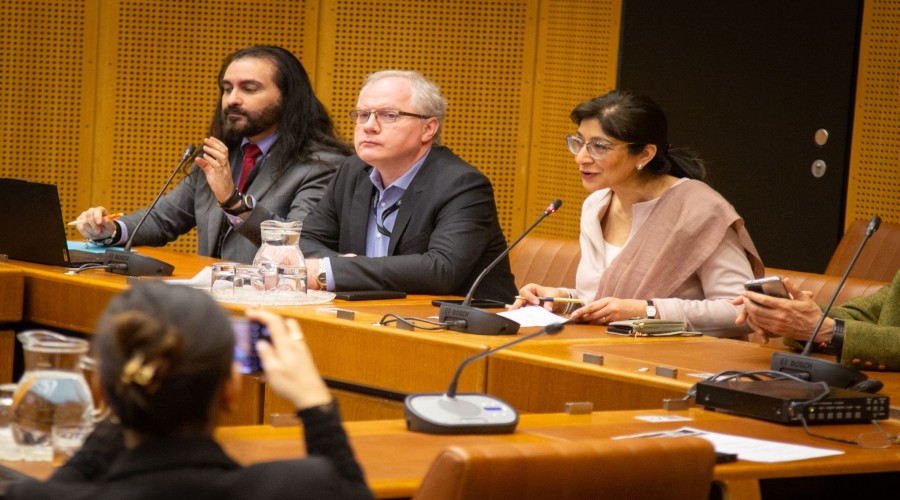
By: Nana Appiah Acquaye
United
Nations Office for Outer Space Affairs has launched a five-day Earth
Observation training programme in Vienna aimed at enhancing the use of
satellite and geospatial data for humanitarian action, disaster preparedness,
and climate resilience.
The
training brings together participants from across the United Nations system to
develop practical skills in applying Earth observation technologies for
situational awareness, needs assessment, crisis monitoring, environmental
analysis, and resilience planning.

Organizers
noted that Earth observation has evolved into a critical tool for supporting
faster and more coordinated responses to global challenges, including natural
disasters and climate-related risks.
The
programme is being delivered in collaboration with United Nations University
Institute for Water Environment and Health and the Committee on Earth
Observation Satellites, alongside key partners such as the Agenzia Spaziale
Italiana, Centre National d'Études Spatiales, German Aerospace Center, and the
European Space Agency.
The
initiative is also closely aligned with the work of the UN-SPIDER, which
focuses on leveraging space-based technologies for disaster risk management.

A
key feature of the training is access to the ESA Space High Performance
Computing Facility, enabling participants to engage in advanced artificial
intelligence and deep learning exercises using state-of-the-art supercomputing
resources.
UNOOSA
said the programme is designed to strengthen the capacity of UN entities to
effectively utilize Earth observation data, supporting more informed
decision-making and improving the overall impact of humanitarian and
development interventions.