By: Nana
Appiah Acquaye
The Danish Meteorological
Institute (DMI), in collaboration with the Ghana Meteorological Agency (GMET)
and CBrain Consulting, has presented the findings of an Information Technology
and Digitalisation Gap Analysis conducted for GMET to Ghana’s Ministry of
Communication, Digital Technology and Innovations.
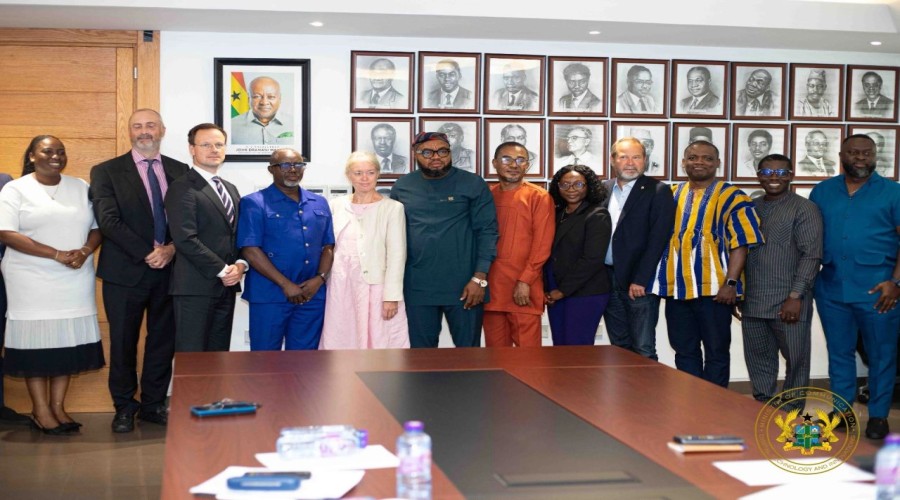
The stakeholder meeting was
held on Wednesday, August 19, 2026, at the Ministry and was attended by Deputy
Minister Mohammed Adam Sukparu, who represented the Sector Minister, Samuel
Nartey George.
The delegation was led by
DMI Director-General, Marianne Thyrring and GMET Director-General, Eric Asuman.
The engagement focused on
strengthening GMET’s digital transformation and improving the agency’s capacity
to provide efficient, technology-driven weather and climate services.
During the meeting, DMI
presented an overview of its digital transformation journey, including
experiences and lessons that could support GMET in modernising its information
technology infrastructure and digital systems.
The IT Gap Analysis findings
and recommendations were presented by CBrain Consulting Regional Manager Christ
Declercq.
The assessment examined
GMET’s ICT infrastructure, digital systems, data governance arrangements,
cybersecurity framework, business processes and digital capabilities. It also
identified key gaps and proposed interventions to support the agency’s digital
transformation.
The assessment was conducted
under the Strategic Sector Cooperation on Weather and Climate between Ghana and
Denmark, with the objective of supporting the development of a robust digital
architecture for GMET.
The proposed digital
improvements are expected to strengthen the agency’s operational efficiency,
data management and delivery of weather and climate information to users across
sectors.
Deputy Minister Mohammed
Adam Sukparu welcomed the findings and called for the development of a
practical and sustainable implementation roadmap to translate the
recommendations into concrete actions.
He said strengthening GMET’s
digital capabilities was critical to improving the management and use of
meteorological data, enhancing service delivery and supporting evidence-based
decision-making in sectors that depend on accurate weather and climate information.
The meeting also provided a
platform for the Ministry, GMET and development partners to discuss possible
implementation scenarios and explore areas of collaboration to address the gaps
identified in the assessment.