By:
Robert Kwaku Annor
The Principal Secretary at the State Department for Science, Research and Innovation, Prof. Shaukat Abdulrazak, has advocated for stronger
efforts to translate gender research into public policy, innovation, investment
and measurable socioeconomic outcomes as the country seeks to advance gender
equality.
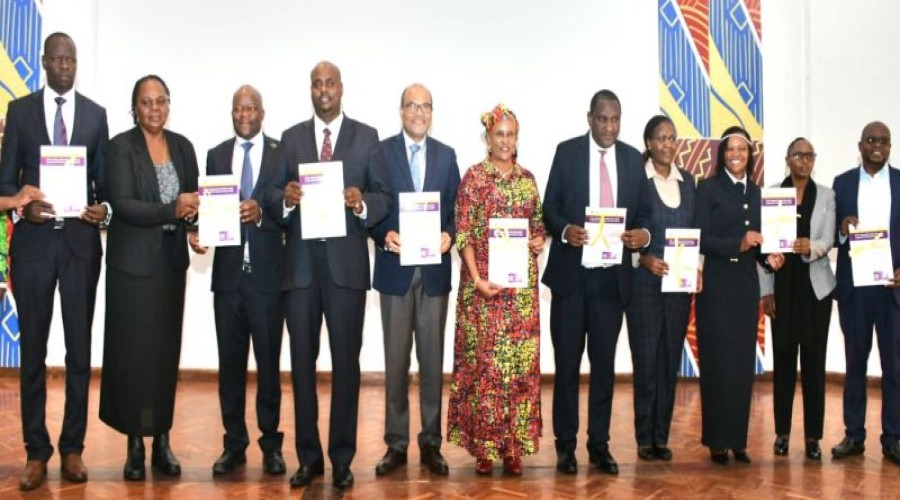
Prof. Shaukat Abdulrazak made this known during the dissemination of the National Gender
Research Agenda under the theme, “Evidence to Impact: Advancing Gender Equality
Through Research, Partnerships and Sustainable Investment.”
Prof. Abdulrazak said Kenya
had made important progress on gender equality but stressed that the next phase
should focus on turning research evidence into practical interventions capable
of delivering measurable results.
He proposed a
“One-Government, One-Evidence” approach that would bring together the National
Gender and Equality Commission, the National Commission for Science and
Technology, the National Research Fund, the Kenya National Bureau of
Statistics, universities, county governments, industry, civil society
organisations and development partners around shared national priorities.
According to him, greater
coordination among these institutions would help strengthen the link between
research, policymaking and implementation while ensuring that public
investments in research produce tangible outcomes.
Prof. Abdulrazak also
highlighted the need to ensure women play a greater role in developing emerging
technologies, particularly artificial intelligence.
He said women should not be
limited to being consumers of technology but should be supported to become
researchers, engineers, data scientists, innovators and entrepreneurs
contributing to the development of new technologies and solutions.
He called for increased
investment in Research Chairs, Gender Research and Innovation Grand Challenges,
mentorship programmes and sustainable co-investment involving government,
academia and industry.
Prof. Abdulrazak said the
Triple Helix model of collaboration among government, academia and industry
could help transform research findings into practical solutions while creating
opportunities for innovation and investment.
He said the success of
Kenya’s gender research agenda should ultimately be measured not by the number
of reports produced but by the extent to which research changes decisions,
generates innovations, mobilises investment, reduces inequalities and improves
lives.
He urged stakeholders to
strengthen partnerships and investment in research and innovation to build a
more inclusive Kenyan economy in which women and other groups can fully
participate in and contribute to the country’s development.