By: Nana
Appiah Acquaye
The Central Bank of Nigeria
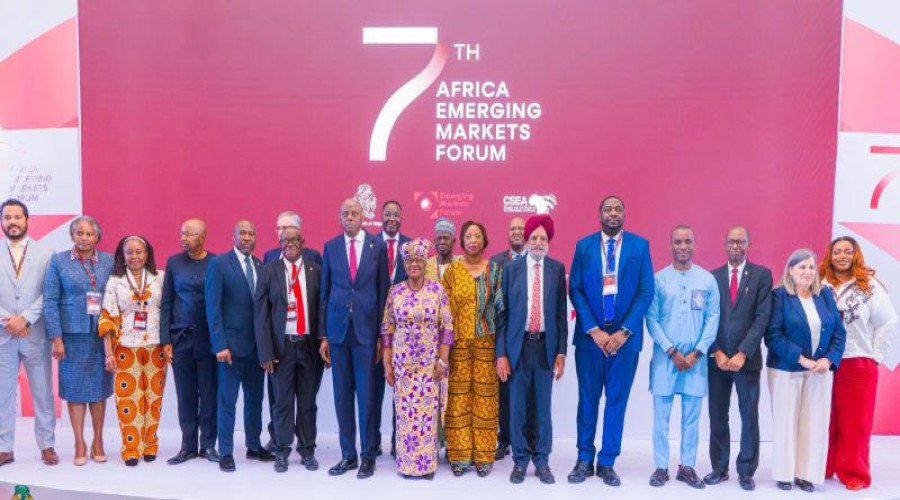
(CBN) has hosted the seventh Africa Emerging Markets Forum (AEMF 2026) in
Abuja, bringing together policymakers, economists, industry leaders and global
development experts to examine the economic forces shaping Africa’s next phase
of growth.
The first day of the forum
featured high-level discussions on global economic trends, monetary policy,
artificial intelligence, regional integration and the role of digital
technologies in strengthening Africa’s economic resilience.
CBN Governor Olayemi Cardoso
held a fireside dialogue with World Trade Organization (WTO) Director-General
Ngozi Okonjo-Iweala, focusing on the forces reshaping the global economy and
the strategic decisions that African countries will need to make to sustain
growth and competitiveness.
The forum also featured
opening remarks from CBN Deputy Governor for Corporate Services Muhammad Sani
Abdullahi, Emerging Markets Forum Founding Director and CEO Harinder Kohli, and
Dr Chukwuka Onyekwena, who welcomed delegates from across Africa and beyond.
Monetary policy was a major
focus of the first panel, which examined how African central banks can navigate
persistent global economic shocks while maintaining macroeconomic stability.
Policymakers and economists discussed approaches to inflation management and
the need for stronger coordination in responding to external economic
pressures.
Artificial intelligence also
emerged as a key issue during the forum, with Indermit Gill, Chief Economist
and Senior Vice President for Development Economics at the World Bank Group,
delivering a keynote address on the transformative potential of AI.
Gill urged developing
economies to adopt bold and forward-looking strategies to harness artificial
intelligence and ensure that the technology contributes to economic
development.
Another major discussion
examined the prospects for deeper regional economic integration through
cross-border payments, fintech, infrastructure development and policy
coordination.
Participants explored how
digital payment systems, financial technology and improved infrastructure could
help remove barriers to intra-African trade while strengthening economic
cooperation across the continent.