By: Nana
Appiah Acquaye
Kenya’s ICT Authority has
engaged technology companies, universities, TVET institutions and other
industry stakeholders to gather technical and market input for a proposed
nationwide campus Wi-Fi rollout under the Kenya Digital Economy Acceleration
Project (KDEAP).
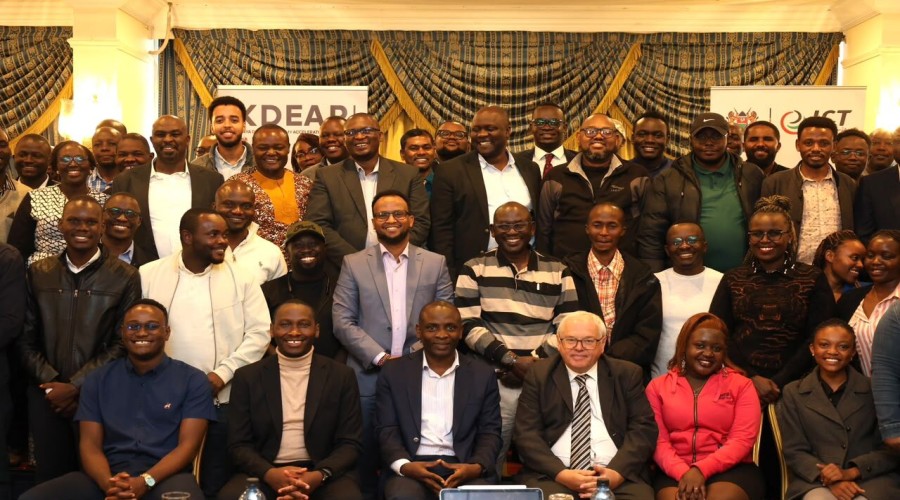
The engagement took place
during an Early Market Engagement (EME) Workshop attended by ICT Authority CEO
Jessy Maruti, representatives of the World Bank, the Ministry of Information,
Communications and the Digital Economy, the Ministry of Education, technology
partners, Original Equipment Manufacturers (OEMs), universities, TVET
institutions and other ICT sector players.
The workshop provided an
opportunity for stakeholders to discuss the proposed procurement approach for
the design, supply, installation and support of campus-wide Wi-Fi
infrastructure in tertiary institutions ahead of the formal procurement
process.
Maruti said the initiative
is intended to extend broadband connectivity beyond campus gates and ensure
students, lecturers, researchers and other members of the academic community
can access reliable internet services across their institutions.
“We are keen on the impact
this solution will have on our students, lecturers, researchers and the entire
academic community. We will deploy the best available technology to deliver
sustainable, secure and meaningful connectivity,” Maruti said.
He added that the early
market engagement would help refine the project’s technical requirements and
procurement documents while ensuring that the investment delivers long-term
public value.
The proposed investment is
expected to connect more than 600 universities, colleges and TVET institutions
across Kenya. The rollout will extend existing fibre connectivity into
classrooms, libraries, hostels, laboratories and open learning spaces to provide
reliable internet access across campuses.
World Bank Lead Digital
Development Specialist Tim Kelly said early engagement with the market was
critical to achieving better procurement outcomes for large-scale digital
infrastructure projects.
Kelly described the
initiative as an effort to address the “last hundred metre problem” by ensuring
that connectivity reaches all parts of tertiary institutions, including
classrooms, laboratories, dormitories and open spaces.
Director of Programmes and
Standards and KDEAP Project Coordinator Thomas Bwaley outlined the broader
objectives of KDEAP, describing it as a flagship government programme financed
by the World Bank to expand high-speed internet access, strengthen digital
government services and enhance digital skills development.
The campus Wi-Fi rollout is
expected to support digital learning, online research, innovation and
collaboration by providing students and academic communities with improved
access to digital resources.